


Nobody clicks because a market is complex. They do so because someone made it look easy.
That is the dangerous beauty of financial hype online: it turns uncertainty into entertainment, speculation into a game, and risk into a missed opportunity. The product changes. The emotional trade does not.
In one cycle, the slogan is “still early.” In another, it is “diamond hands.” In the next, it is “free money,” “huge gains,” or “am I missing something?” The words are different, but the pressure is familiar: act now, trust the screen, do not be the last one to understand the shortcut.
This is where new markets become fragile. Not because novelty itself is fraudulent, but because attention often arrives before literacy. People see clips, creator confidence, apparent wins, bonus codes, and simplified interfaces long before they understand what is being traded, who is being paid, and what risk has been hidden from view.
The recent attention around Polymarket’s creator campaigns is one example of that wider pattern. The Wall Street Journal reported repeated use of “free” language in promotional videos and found cases where apparent trades or wins were shown through simulated or non-real environments. On its own, that is a platform story. In context, it is a market-behavior story.
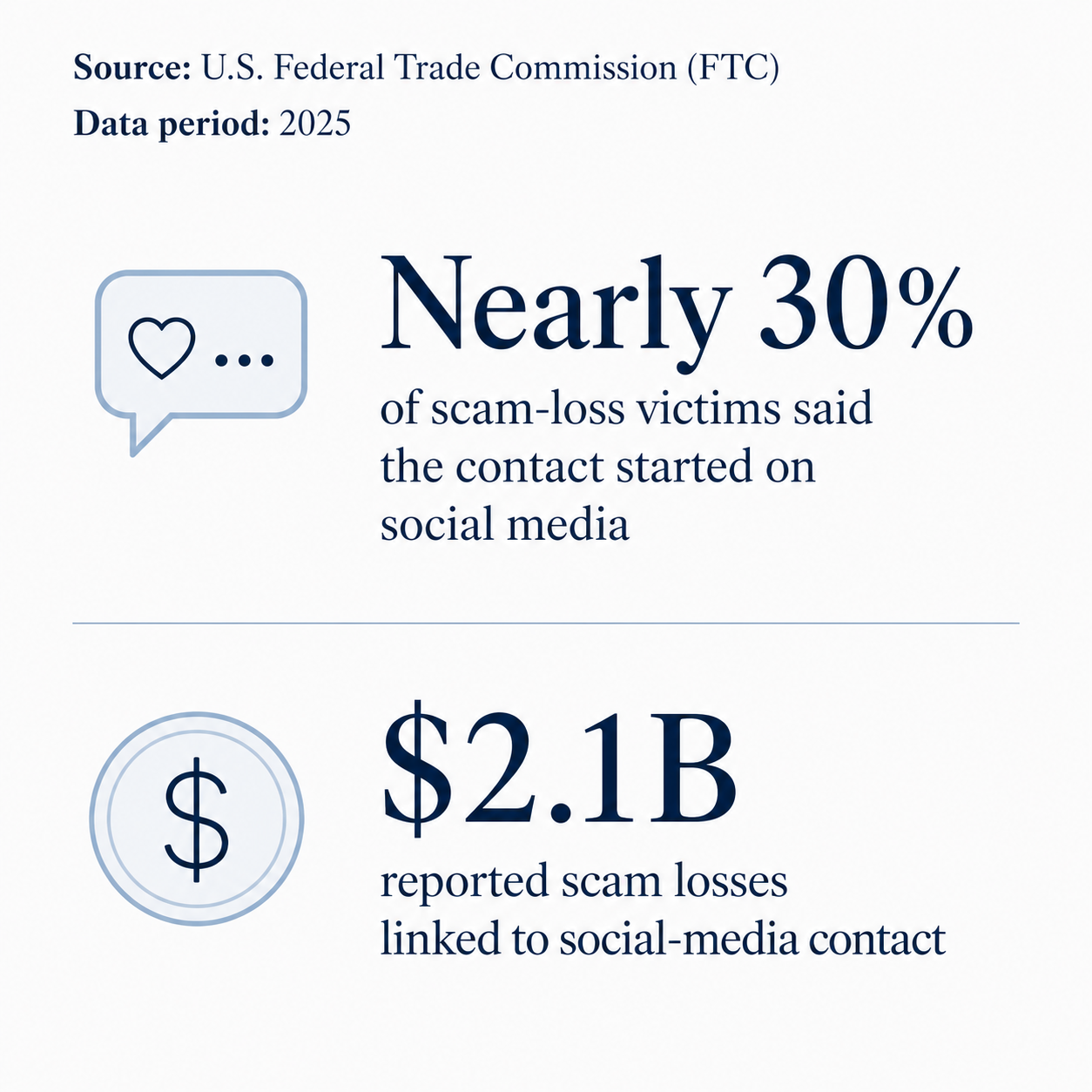
The FTC reported that in 2025, nearly 30% of people who lost money to scams said the contact started on social media, with reported losses of $2.1 billion. IOSCO has also warned that financial influencers create investor-protection risks as retail users increasingly receive market cues from online personalities rather than regulated financial channels.
Fraud does not need one specific technology. It needs speed, trust, weak verification, and a believable promise that the hard part has already been solved.
New markets do not invent manipulation. They give it fresh words, faster channels, and a new audience ready to believe that this time, the money really is free.
Sources
- Wall Street Journal, “Polymarket Pushes Fake Bets,” June 22, 2026, from the attached source article.
- Federal Trade Commission, “Reported losses to scams on social media eight times higher than 2020,” April 27, 2026.
- International Organization of Securities Commissions, “Finfluencers: Final Report,” May 19, 2025.